 Black Mongoose Martial Arts
 List
List Grid
GridGray Glove / Pink Glove Boxing
10 - 10:45am
10:00am - 10:45am
Gray Glove / Pink Glove Boxing
 Timothy Lamey
Timothy Lamey
Timothy Lamey
 Timothy Lamey
Gray Glove / Pink Glove Boxing is a non-contact, boxing-inspired fitness program tailored to fight a diverse range of neuromuscular and autoimmune disease symptoms. Designed and taught by a clinical exercise physiologist, neuromuscular physiologist, and boxing instructor with over 30 years of experience. Gray Glove / Pink Glove Boxing focuses on improving balance, mobility, flexibility, and hand-eye coordination, bone health, and cardiovascular and muscular fitness. As well as improving specific challenges like stiffness, tremor, voice projection, and gait. The program emphasizes camaraderie, support, and social connection. Gray Glove / Pink Glove Boxing program emphasizes camaraderie, support, and social connection, which are crucial for those with movement disorders. Training in a group reduces isolation and provides a supportive "family" environment of peers facing similar challenges. As well as improved mood and boosts confidence. Classes involve boxing-related movements (punching bags) as well as stretching and strength training exercises.
A standard session lasts between 45 and 60 minutes and follows a high-intensity, non-contact circuit format. The general breakdown of a class is:
Dynamic Warm-Up: Prepares the body for movement and specifically addresses muscle rigidity.
Core & Balance Training: Exercises like "up and downs" and standing drills to improve posture and reduce fall risk.
Boxing Drills: Using heavy bags and focus mitts to target hand-eye coordination, speed, and reaction time.
Vocal Activation: Loud vocalizations are encouraged during drills to combat the soft voice symptoms common to many diseases.
Cognitive Tasks: Many drills incorporate "brain-training" exercises to challenge focus and mental multitasking.
Cool-Down: Ends with stretching to improve flexibility and reduce stiffness.
Requirements: Boxing gloves
This day is marked as closed. Reopen the day to edit or restore sessions.
 Timothy Lamey
Timothy Lamey
Timothy Lamey
CROSS-HIIT: exercise is medicine. A high-intensity strength-and-conditioning workout to add to your fitness regimen. Improve your agility, flexibility, strength, and aerobic fitness. Based on boxing and martial Arts conditioning and backed by scientific research, and coached by an exercise physiologist and strength and conditioning coach.
This day is marked as closed. Reopen the day to edit or restore sessions.
 Timothy Lamey
Timothy Lamey
Timothy Lamey
CROSS-HIIT: exercise is medicine. A high-intensity strength-and-conditioning workout to add to your fitness regimen. Improve your agility, flexibility, strength, and aerobic fitness. Based on boxing and martial Arts conditioning and backed by scientific research, and coached by an exercise physiologist and strength and conditioning coach.
This day is marked as closed. Reopen the day to edit or restore sessions.
 Timothy Lamey
Timothy Lamey
Timothy Lamey
Boxing and exercise as medicine - programs designed and coached by a clinical exercise physiologist to focus on increasing functional movement, balance, muscular strength, and cardiorespiratory fitness to improve AODL (activities of daily living)
This day is marked as closed. Reopen the day to edit or restore sessions.
 Timothy Lamey
Timothy Lamey
Timothy Lamey
Gray Glove / Pink Glove Boxing is a non-contact, boxing-inspired fitness program tailored to fight a diverse range of neuromuscular and autoimmune disease symptoms. Designed and taught by a clinical exercise physiologist, neuromuscular physiologist, and boxing instructor with over 30 years of experience. Gray Glove / Pink Glove Boxing focuses on improving balance, mobility, flexibility, and hand-eye coordination, bone health, and cardiovascular and muscular fitness. As well as improving specific challenges like stiffness, tremor, voice projection, and gait. The program emphasizes camaraderie, support, and social connection. Gray Glove / Pink Glove Boxing program emphasizes camaraderie, support, and social connection, which are crucial for those with movement disorders. Training in a group reduces isolation and provides a supportive "family" environment of peers facing similar challenges. As well as improved mood and boosts confidence. Classes involve boxing-related movements (punching bags) as well as stretching and strength training exercises.
A standard session lasts between 45 and 60 minutes and follows a high-intensity, non-contact circuit format. The general breakdown of a class is:
Dynamic Warm-Up: Prepares the body for movement and specifically addresses muscle rigidity.
Core & Balance Training: Exercises like "up and downs" and standing drills to improve posture and reduce fall risk.
Boxing Drills: Using heavy bags and focus mitts to target hand-eye coordination, speed, and reaction time.
Vocal Activation: Loud vocalizations are encouraged during drills to combat the soft voice symptoms common to many diseases.
Cognitive Tasks: Many drills incorporate "brain-training" exercises to challenge focus and mental multitasking.
Cool-Down: Ends with stretching to improve flexibility and reduce stiffness.
Requirements: Boxing gloves
This day is marked as closed. Reopen the day to edit or restore sessions.
 Timothy Lamey
Timothy Lamey
Timothy Lamey
CROSS-HIIT: exercise is medicine. A high-intensity strength-and-conditioning workout to add to your fitness regimen. Improve your agility, flexibility, strength, and aerobic fitness. Based on boxing and martial Arts conditioning and backed by scientific research, and coached by an exercise physiologist and strength and conditioning coach.
This day is marked as closed. Reopen the day to edit or restore sessions.
 Timothy Lamey
Timothy Lamey
Timothy Lamey
CROSS-HIIT: exercise is medicine. A high-intensity strength-and-conditioning workout to add to your fitness regimen. Improve your agility, flexibility, strength, and aerobic fitness. Based on boxing and martial Arts conditioning and backed by scientific research, and coached by an exercise physiologist and strength and conditioning coach.
This day is marked as closed. Reopen the day to edit or restore sessions.
Timothy Lamey
Boxing and exercise as medicine - programs designed and coached by a clinical exercise physiologist to focus on increasing functional movement, balance, muscular strength, and cardiorespiratory fitness to improve AODL (activities of daily living)
This day is marked as closed. Reopen the day to edit or restore sessions.
Timothy Lamey
Muay Thai or Thai Boxing, known as the "Art of Eight Limbs,” is a martial arts combat sport from Thailand. This dynamic art uses punches, elbows, knees, and kicks, as well as clinching, sweeps, and throws. Muay Thai practice requires a high level; it builds cardiovascular and muscular endurance. An exciting way to improve cardiovascular fitness, muscle strength, mental health, and bone density.
This day is marked as closed. Reopen the day to edit or restore sessions.
 Timothy Lamey
Book
Timothy Lamey
Timothy Lamey
Book
Timothy Lamey
Gray Glove / Pink Glove Boxing is a non-contact, boxing-inspired fitness program tailored to fight a diverse range of neuromuscular and autoimmune disease symptoms. Designed and taught by a clinical exercise physiologist, neuromuscular physiologist, and boxing instructor with over 30 years of experience. Gray Glove / Pink Glove Boxing focuses on improving balance, mobility, flexibility, and hand-eye coordination, bone health, and cardiovascular and muscular fitness. As well as improving specific challenges like stiffness, tremor, voice projection, and gait. The program emphasizes camaraderie, support, and social connection. Gray Glove / Pink Glove Boxing program emphasizes camaraderie, support, and social connection, which are crucial for those with movement disorders. Training in a group reduces isolation and provides a supportive "family" environment of peers facing similar challenges. As well as improved mood and boosts confidence. Classes involve boxing-related movements (punching bags) as well as stretching and strength training exercises.
A standard session lasts between 45 and 60 minutes and follows a high-intensity, non-contact circuit format. The general breakdown of a class is:
Dynamic Warm-Up: Prepares the body for movement and specifically addresses muscle rigidity.
Core & Balance Training: Exercises like "up and downs" and standing drills to improve posture and reduce fall risk.
Boxing Drills: Using heavy bags and focus mitts to target hand-eye coordination, speed, and reaction time.
Vocal Activation: Loud vocalizations are encouraged during drills to combat the soft voice symptoms common to many diseases.
Cognitive Tasks: Many drills incorporate "brain-training" exercises to challenge focus and mental multitasking.
Cool-Down: Ends with stretching to improve flexibility and reduce stiffness.
Requirements: Boxing gloves
This day is marked as closed. Reopen the day to edit or restore sessions.
Timothy Lamey
Muay Thai or Thai Boxing, known as the "Art of Eight Limbs,” is a martial arts combat sport from Thailand. This dynamic art uses punches, elbows, knees, and kicks, as well as clinching, sweeps, and throws. Muay Thai practice requires a high level; it builds cardiovascular and muscular endurance. An exciting way to improve cardiovascular fitness, muscle strength, mental health, and bone density.
This day is marked as closed. Reopen the day to edit or restore sessions.
Timothy Lamey
 Karen Uber
Jeet Kune Do (JKD), or "Way of the Intercepting Fist," is a hybrid martial arts system developed by Bruce Lee in the 1960s, prioritizing directness, simplicity, and efficiency over rigid forms. Based on the philosophy of "using no way as way," it incorporates techniques from fencing, boxing, and Wing Chun to maximize speed and combat effectiveness. The core principles & philosophy are intercepting an opponent’s attack or intention rather than just blocking. Simplicity & Directness: Utilizing the most straightforward motions to conserve energy. Freedom: "No way as way," meaning avoiding rigid, traditional techniques and adapting to the situation. "Be Like Water": A philosophy emphasizing fluidity, adaptability, and emotional awareness.
Key Jeet Kune Do Moves & Techniques: Straight Lead: The signature punch, prioritizing the strongest (lead) hand for speed and power. Trapping & Parrying: Hand techniques, often from Wing Chun, designed to control or clear the opponent's arms, such as the Pak Sao (slap block). Footwork: "Scientific" movement designed to create angles and manage distance for quick, non-telegraphic attacks. Five Ways of Attack: A framework containing Single Direct Attack, Single Angular Attack, Attack by Combination, Progressive Indirect Attack, and Attack by Drawing.
Requirements for first level (no sash to white sash rank) students:
Black sweatpants or Gi pants and gray t-shirt (students have the opportunity to purchase the school's official training t-shirt)
School training t-shirt
Bag gloves
Focus mitts (optional)
Requirements for second- and above-level (white sash and above rank) students:
Thai Pads
Focus Mitts
This day is marked as closed. Reopen the day to edit or restore sessions.
 Timothy Lamey
 Karen Uber
Timothy, Karen
Book
Timothy Lamey
Karen Uber
Karen Uber
Timothy, Karen
Book
Timothy Lamey
Karen Uber
Filipino Martial Arts is an umbrella term that refers to a diverse set of ancient geo-cultural tribal fighting methods devised throughout the Philippine islands, most popularized by systems known as Arnis, Eskrima, and Kali. The intrinsic need for self-preservation was the genesis of these systems. The techniques and training methodologies involve drills to develop sensitivity, rhythm, and speed, for tribal weapons that often parallel empty-hand techniques, allowing for a seamless transition between armed and unarmed combat. Filipino Martial Arts prioritizes controlling the fight through agile dance-like footwork and body angulation, with defensive techniques aimed at simultaneously injuring the opponent, focusing on rapid, brutal close-quarter combat, weaponry, and ground fighting. It emphasizes flowing movements, using frames, levers, and, in some styles, animalistic movements.
Requirements for first level (no sash to white sash rank) students:
Black sweatpants or Gi pants and gray t-shirt (students have the opportunity to purchase the school's official training t-shirt)
School training t-shirt
One pair of kali sticks
One aluminum training knife
Bag gloves
Focus mitts (optional)
Requirements for second and above level (white sash and above rank) students:
Two aluminum training knives
Thai Pads
Focus Mitts
This day is marked as closed. Reopen the day to edit or restore sessions.



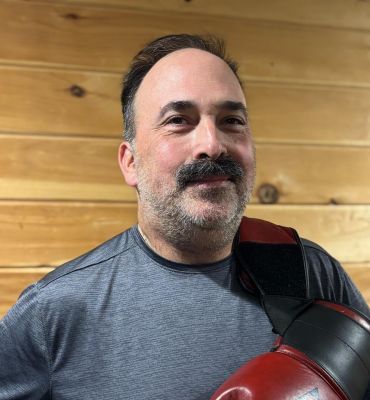 Timothy Lamey
 Karen Uber